For families facing medulloblastoma, one of the greatest concerns is the possibility that the cancer could return after treatment. Although advances in research have improved survival rates, treatment options remain limited when the disease comes back. Researchers are now exploring new ways to treat recurrent medulloblastoma, including an unexpected approach involving a medication commonly used to treat thyroid conditions.
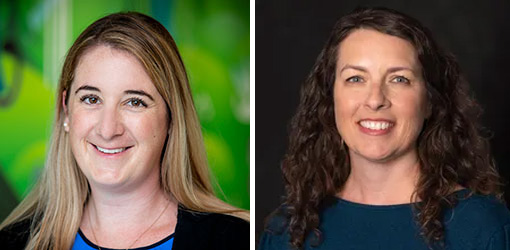
In a recent interview with The Cure Starts Now, Dr. Rebecca Ronsley of Seattle Children's Hospital and Dr. Lindsay Kilburn of Children's National Hospital discussed PNOC044, a new clinical trial investigating whether thyroid hormone could help fight medulloblastoma. The study is also exploring whether doctors might be able to identify and treat signs of returning cancer before a tumor becomes visible on an MRI. Supported in part by The Cure Starts Now, this study brings together researchers from across the country to investigate new possibilities for children and young adults facing medulloblastoma recurrence.
A Different Way to Target Medulloblastoma
One treatment doctors may use when medulloblastoma returns combines three medications: irinotecan, temozolomide, and bevacizumab. Research has shown that this combination can help delay the progression of the disease, but it does not work for every patient. Researchers are now investigating whether adding a thyroid hormone medication could improve its effectiveness.
The medication, called liothyronine (T3), is already FDA-approved to treat an underactive thyroid. While thyroid hormone is normally associated with regulating metabolism, growth, and development, scientists have discovered that it may also affect how medulloblastoma cells behave.
What makes this approach especially interesting is that it works differently from traditional chemotherapy. Chemotherapy generally targets cells that are rapidly dividing. T3, on the other hand, may encourage cancer cells to mature, making them less likely to continue growing and multiplying. This process is called cell differentiation. Rather than relying only on treatments that kill cancer cells, researchers are investigating whether they can also change how those cells behave.
The idea came from research led by Dr. Zheng-jie Yang at Fox Chase Cancer Center in Philadelphia. In laboratory studies involving mice, his team found that T3 slowed the growth of certain types of medulloblastoma. They also found that combining T3 with chemotherapy appeared to work better than either treatment alone. These findings helped lay the groundwork for PNOC044.
So far, the laboratory research has focused on two molecular groups of medulloblastoma: Group 3 and Sonic Hedgehog (SHH). The researchers were not able to study Group 4 because suitable laboratory models were unavailable. As Dr. Ronsley explained, this does not mean T3 would not work for patients with Group 4 medulloblastoma. It simply means researchers do not yet know.
Importantly, these results have only been demonstrated in laboratory studies, not in patients. PNOC044 is an important next step in determining whether this approach can be used safely and whether it could offer a new treatment option for children and young adults with recurrent medulloblastoma.
One Trial, Two Patient Groups
PNOC044 is studying two groups of patients with medulloblastoma. The first includes patients whose cancer has returned and can be seen on an MRI. The second includes patients who have previously undergone treatment for medulloblastoma and whose MRI scans show no visible cancer, but whose cerebrospinal fluid (CSF) testing detects molecular signs that the disease may still be present. By studying both groups, researchers hope to learn whether thyroid hormone could help treat cancer that has already returned or potentially intervene before a recurrence becomes visible.
For patients with visible recurrent medulloblastoma, researchers are adding T3 to the combination of irinotecan, temozolomide, and bevacizumab. The study will first determine the safest and most appropriate dose of T3 when given alongside these medications. Researchers will then evaluate how well the combination controls the disease.
The second group represents a different opportunity. These patients have no visible signs of recurrence on MRI, but more sensitive testing has detected tumor-derived DNA in their cerebrospinal fluid. Rather than receiving the three-drug chemotherapy combination, these patients will receive T3 alone. Researchers hope to learn whether treating these early molecular signs of disease could help delay or reduce the likelihood of a visible recurrence.
Detecting Cancer Before It Appears on MRI
Traditionally, doctors have relied heavily on MRI scans to monitor patients after medulloblastoma treatment. However, researchers have developed increasingly sensitive tests that can detect tiny fragments of genetic material released by tumor cells into the fluid surrounding the brain and spinal cord. This fluid, known as cerebrospinal fluid (CSF), can be examined for tumor-derived cell-free DNA, potentially revealing evidence of disease even when no tumor is visible on imaging.
Research led by Dr. Paul Northcott's laboratory at St. Jude Children's Research Hospital demonstrated that detecting tumor-derived DNA in CSF may help identify patients at increased risk of medulloblastoma recurrence. This discovery has opened an important new area of research because it suggests that molecular evidence of disease may sometimes be detected before a tumor becomes visible on an MRI. However, doctors do not yet know exactly when a patient with positive cell-free DNA findings might experience a relapse or whether treating those findings will improve outcomes.
PNOC044 is helping researchers begin to answer these questions. In the group receiving T3 alone, investigators will study whether the medication can reduce or eliminate detectable tumor DNA and whether this approach might eventually help prevent or delay a visible recurrence. Studying T3 without the three-drug chemotherapy combination may also help researchers understand whether these early signs of disease can be addressed without exposing patients to the additional side effects of intensive chemotherapy.
An important consideration as this research advances is access to testing. Although cell-free DNA testing is becoming increasingly important in medulloblastoma research, it is not yet routinely available at every hospital. As researchers continue to explore how this technology might improve early detection and treatment, expanding access will be important to ensuring that more patients and families can benefit from these advances.
Balancing Safety and Access in PNOC044
While PNOC044 explores a new approach to treating medulloblastoma, the researchers are also taking important precautions to understand how thyroid hormone affects patients receiving cancer treatment. Although T3 is already FDA-approved for treating thyroid conditions, its use at doses intended to treat cancer, particularly in combination with chemotherapy, requires additional study. Because thyroid hormone influences several functions throughout the body, including heart function and metabolism, specialists in pediatric cardiology and endocrinology helped develop the trial's safety monitoring plan.
An important topic raised during the interview was the trial's maximum age of 25, particularly since medulloblastoma can also affect adults. Dr. Ronsley explained that this decision was based largely on the available pediatric safety data, particularly in endocrinology and cardiology, which extended through age 25. By focusing on this population, researchers can build on existing knowledge while carefully evaluating the safety of T3 in a new treatment setting.
Dr. Kilburn offered additional perspective on the complexities of establishing age limits in pediatric cancer trials. Researchers must consider not only patient safety but also how differences between patient populations may affect the interpretation of study results, particularly when comparing findings with previous clinical trials.
Bringing Research from the Laboratory to Patients
PNOC044 represents several years of collaboration between laboratory scientists, pediatric neuro-oncologists, and specialists in other areas of medicine. The study was first presented at a Pediatric Neuro-Oncology Consortium (PNOC) meeting in Boston in 2024, where researchers began discussing how the laboratory findings could be translated into a clinical trial. Following extensive planning and regulatory review, the study received FDA and institutional review board approvals.
As of the October 2026 interview, PNOC044 was open at Seattle Children's Hospital in Washington and Children's National Hospital in Washington, DC, with additional participating centers expected to open. Families interested in the trial are encouraged to speak with their treating neuro-oncologist about eligibility and referral options. Because enrollment requirements and participating locations may change, families can visit the PNOC044 study page for updates on participating sites and the study's ClinicalTrials.gov listing for additional study information.
Beyond the specific medication being studied, PNOC044 reflects a broader shift in how researchers approach medulloblastoma. During the interview, Dr. Ronsley reflected on how advances in molecular research have revealed important differences between medulloblastoma tumors, helping doctors better understand which patients may need more intensive treatment and which might safely receive less. These discoveries are moving researchers toward more personalized treatment strategies, with the goal of improving survival while reducing the long-term effects of treatment whenever possible.
Dr. Kilburn also emphasized the importance of collaboration in bringing promising discoveries into clinical care. Through the PNOC medulloblastoma working group that she co-leads with Dr. Robert Wechsler-Reya, laboratory scientists and clinical researchers regularly share findings and discuss ideas for new treatments. These conversations are especially valuable for a disease like medulloblastoma, where relatively small patient populations make collaboration across institutions essential. PNOC044 is one example of how researchers working together can turn a laboratory discovery into a clinical trial.
Looking Ahead
There are still many unanswered questions about the potential role of thyroid hormone in medulloblastoma treatment. Researchers do not yet know whether adding T3 to chemotherapy will improve outcomes for patients with visible recurrence, whether the medication will benefit all molecular subgroups, or whether treating positive cell-free DNA findings can prevent or delay a future relapse. These are the questions PNOC044 is designed to investigate, and the answers will require careful study over time.
With support from organizations including The Cure Starts Now, researchers are working to turn scientific discoveries into new treatment possibilities for children and families affected by medulloblastoma. Although PNOC044 is still in its early stages, it represents an important step toward understanding whether an existing medication could offer another option for patients facing recurrence.
Learn more about PNOC044: ClinicalTrials.gov – PNOC044
This article is based on an October 2026 interview with Dr. Rebecca Ronsley of Seattle Children's Hospital and Dr. Lindsay Kilburn of Children's National Hospital. Clinical trial eligibility, availability, and study procedures may change. Families should consult their medical team for current information.
Additional Sources and Further Reading
Serial Assessment of Measurable Residual Disease in Medulloblastoma Liquid Biopsies (2021)